Standfirst: On most critical-power projects, the equipment that decides when you can energize isn’t the equipment anyone worries about first. Here is how the lead-time math actually works at enterprise and facility scale, and how to keep it from setting your schedule for you.
The problem shows up late, when it’s expensive to fix
Walk into an early project meeting for a new or expanded facility and the conversation is usually about the building, the fit-out, and the compute. The power equipment feeding all of it tends to be treated as a detail to sort out later. In our experience, that ordering (building first, power later) is exactly backwards for the items that take the longest to arrive.
The pattern we see repeatedly: a project holds its dates cleanly through design and early construction, then stalls near the end because a long-lead electrical component hasn’t shipped. By that point the expensive mistake is already made. You cannot buy back a lead time once the clock is running; you can only start the clock earlier. This blog is about starting it earlier on purpose.
What actually has a long lead time
Not all equipment moves at the same speed, and the delays cluster on the power side. At the scale most of our work sits (network closets, MDF and IDF rooms, and enterprise data centers), these are the ranges worth planning around today:
- UPS and power-distribution equipment: normally a three-to-six-month order, but stretching toward nine to twelve months when backlogs build. This is the one that catches teams off guard, because it used to be routine.
- Switchgear and breakers: commonly one to two years for higher-voltage gear, and supply remains tight.
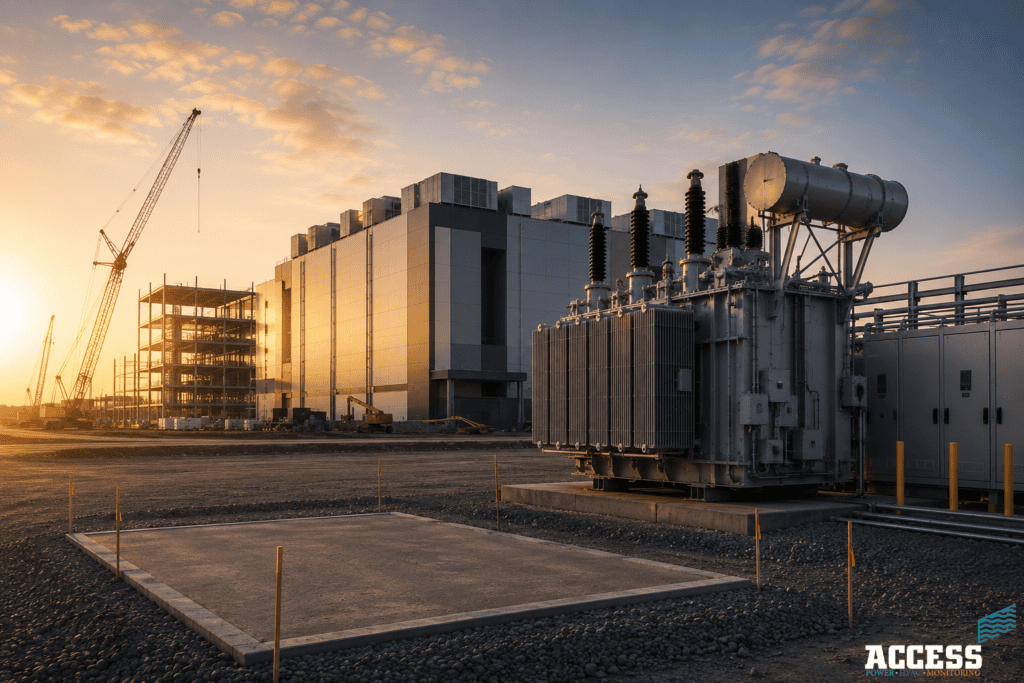
- Transformers: multi-year for the larger units that bring utility power onto a site, long enough that they frequently become the single item the rest of the schedule waits on.
- Standby generation: often six to twelve months, and longer when engine backlogs are heavy.
The specific numbers move with the market, so treat them as a planning starting point rather than a quote. The durable point is the shape of the curve: the closer a component sits to the utility connection, the longer and more variable its lead time, and the more it deserves an early decision.
Phasing the electrical buildout
The single most useful habit we see on projects that hold their dates is phasing. Rather than treating energization as one event that waits for every piece of gear, a phased plan lets early loads come online while later equipment is still in transit.
That means designing the electrical distribution so it can be built out in stages, sizing the early phase to real near-term load rather than the full future build, and sequencing procurement so the longest-lead items are ordered first, before the rest of the design is fully locked. Phasing also reduces the risk of paying for capacity that sits idle waiting on demand that has not arrived yet. It is a schedule strategy and a capital strategy at the same time.
None of this removes the need for site work, permitting, or the utility’s own timeline. It does keep a single late component from holding the entire facility hostage.
Getting power to the site: the transformer angle
The hardest part to control is usually the equipment that brings utility power onto the site, because that is where the longest lead times and the utility’s own schedule intersect. It is also where Access’s position has changed in a way that matters here.
Access now represents utility-scale transformers, in addition to the facility-scale critical-power gear we have always deployed. Practically, that gives us a way to help firm power actually reach the site rather than treating the utility interface as someone else’s problem that surfaces late. When the transformer that steps power down for your facility is part of the procurement conversation from the start, the longest-lead item on the project stops being a blind spot.
The same logic applies to pre-ordering. For long-lead facility gear, we plan procurement against a phased delivery schedule instead of a single date, so equipment arrives in the sequence the buildout actually needs it: not all at once, and not too late.
From delivered to operating
A piece of gear arriving on site is not the same as a piece of gear doing work. The gap between delivery and reliable operation (commissioning, integration, and the monitoring that confirms everything behaves under load) is its own source of schedule slip if it is not planned for.
This is where ACSI comes in. ACSI handles commissioning, monitoring, and lifecycle maintenance once much of the equipment lands, so the handoff from “delivered” to “operating” doesn’t quietly add weeks of its own. Planning that service scope alongside procurement, rather than after it, keeps the end of the schedule as disciplined as the beginning.
Engage early — it’s cheaper there
The recurring theme underneath all of this is timing. Being brought in before building planning starts is where lead-time risk is cheapest to manage, because procurement decisions can still be sequenced correctly and the design can accommodate a phased buildout. Being brought in late is where it gets expensive: the long-lead items are already behind, the design assumes deliveries the market can’t support, and the options narrow to paying for expedite or absorbing delay.
Takeaway: The equipment that sets your energization date is rarely the equipment you worry about first. Map your long-lead items early, order them ahead of the rest of the design, and phase the buildout so no single late component can stall the whole project.
If you are scoping a build for 2027 or 2028, the procurement conversation is a today conversation. Access can help you find where the long-lead risk actually sits in your project. Reach out and we will walk through it.